
Marine, RV &
Commercial Detailing
Boats · Motorhomes · Trucks · Buses · Working at heights · Confined spaces
Issued April 2026 · Next review April 2027
At a glance
- Task / activity
- Marine, RV, Commercial & Heavy Vehicle Detailing
- Location
- Customer site or yard; often outdoors
- Personnel required
- 2 workers minimum (no lone working at height)
- Estimated duration
- Half-day to multi-day
- Prerequisite training
- Working at heights (NZQA / WorkSafe equivalent) · MEWP ticket if used · Confined space awareness · Site induction
What is this?
Detailing of large vehicles — boats, motorhomes, trucks, buses, and heavy plant. Involves working at heights on large surfaces, sometimes confined-space interiors, often outdoors at customer sites.
Performed by 2 workers minimum — no lone working at height. Half-day to multi-day jobs.
What could hurt you?
- • Fall from height — gel-coat polishing on hulls / RV roofs / truck cabs is the highest-consequence hazard on this task.
- • Contact with overhead power lines (4 m exclusion for unpermitted work).
- • Confined space vapour build-up in RV cabins / boat cabins.
- • Heat exhaustion or heat stroke during outdoor summer work.
- • Falling into water during marine / boatyard work.
Mandatory PPE
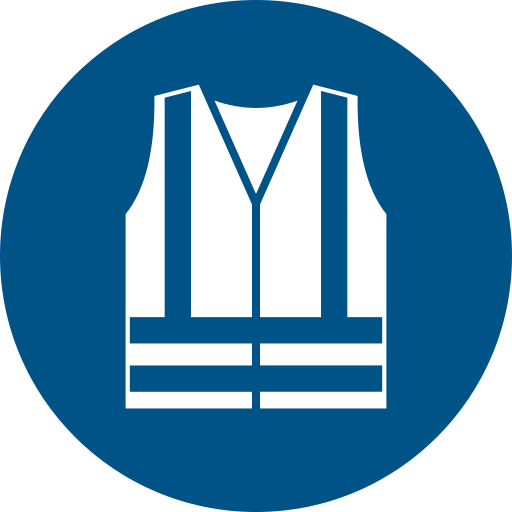
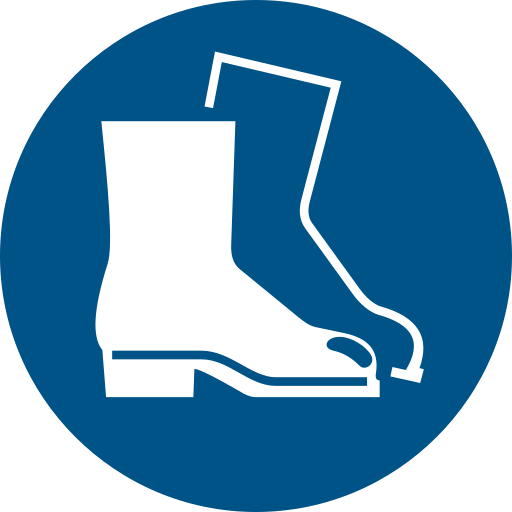

Hi-vis vest, steel-cap boots, sealed goggles for overhead work, hard hat under suspended platform/mast, fall-arrest harness with lanyard for any work >3 m without edge protection, sun protection.
Plus task-specific PPE per the chemical / mechanical work being done — see Wash, Polish, Coating JSAs.
STOP — Two workers, no lone work at height
No worker climbs above 3 m alone. Buddy system at all times for ladder, scaffold and MEWP work. If your buddy leaves the site, descend and pause until they return. Suspended-harness rescue has a 15-minute trauma window — alone, you may not survive a fall arrest.
Mandatory PPE
-
High-vis vest
AS/NZS 4602.1 — Class D/N for any roadside or low-light work. Mandatory at customer commercial sites.
-
Steel-cap boots
AS/NZS 2210.3 — for boatyard / truck-yard surfaces. Slip-resistant sole essential on wet decks.
-
Sealed goggles
AS/NZS 1337.1 — overhead spray, dust and chemical drip into upturned face is a major risk on this task.
-
Fall-arrest harness + lanyard
AS/NZS 1891 — for any work at height >3 m without edge protection. Pre-use inspection mandatory. Hard hat (AS/NZS 1801) under suspended platform / mast. Sun protection.
Procedure
- 1
Site survey: identify height work, overhead lines, ground conditions, exclusion zone.
Hazards
- ⚠Overhead power lines (4 m exclusion for un-permitted work)
- •Uneven ground for ladders / MEWPs
- •Public access to work area
Controls
- ✓Maintain ≥4 m from overhead lines; permit if closer; phone lines company first
- •Set platforms on solid level ground; spreader plates if soft
- •Cordon and signage; brief customer to keep family / staff clear
- 2
Establish access plan: prefer scaffold / MEWP over ladder.
Hazards
- ⚠Ladder fall
- •Over-reach from ladder
- ⚠MEWP tip-over
Controls
- ✓Two-person ladder use; 3-points of contact at all times
- •Position so work is between knees and shoulders — never reach above shoulder height on a ladder
- ✓MEWP only by ticketed operator; pre-use checks per manufacturer; outriggers fully extended on level ground
- 3
Wash / decontaminate (per Exterior Wash JSA, scaled for the larger surface). For boats with sea-water or sea-air exposure, pre-treat with Salt-Away Concentrate (label-claimed non-hazardous, water-based, biodegradable).
Hazards
- •Slips from runoff
- •Hose / lead trip hazards on large footprint
- •Salt-Away — minimal hazard per label; verify against SDS once filed
Controls
- •Manage runoff away from work area; absorbent boom if near drains
- •Route services overhead where possible
- •Apply Salt-Away per label dilution; rinse thoroughly
- 4
Polish / oxidation removal on gel-coat or paint (Autostolz / Meguiar gel-coat compounds via DA / rotary). Hand-applied finishing: Zephyr Z-Creme Cherry Wax (paint / gelcoat). Hand-applied metal polishing: Zephyr Pro 25 Easy Kut on metal trim, exhaust, fittings. Aluminium / stainless brightening: Green Kiwi Alumamaze 1:5 — strict acid handling.
Hazards
- ⚠Sustained vibration on large surfaces — HAVS risk over multi-day jobs (machine polishing only; the Zephyr products are hand-applied)
- •Heat exhaustion outdoors
- •Spatter at distance from sling-off
- ⚠Zephyr Z-Creme + Pro 25 (US polishes, both HAND-APPLIED at TDS) — likely H304 ASPIRATION HAZARD (petroleum distillates) and possible H226 flammable pending SDS. Treat as Prepare It-class first aid (do NOT induce vomiting if swallowed).
- •Repetitive wrist strain from hand application of Z-Creme / Pro 25 over large surfaces
- ⚠Alumamaze — phosphoric acid H314 / H318 corrosive. NEVER use on painted, plated or anodised surfaces — etching damage.
Controls
- ✓Rotate operators every 60 min for machine polishing — track HAVS exposure across the job
- •Hydration breaks every 30 min in summer; shade between bouts
- •Sealed goggles always on for overhead polishing
- ✓Zephyr products (hand-applied) — NO ignition sources within 3 m if H226 confirmed. Cap container immediately. Nitrile gloves; safety eyewear; long sleeves. Bay door open / general ventilation sufficient (no aerosol from hand application). Switch hands, take micro-breaks for repetitive strain.
- ✓Alumamaze — full chemical PPE (PVC/Viton gloves, sealed goggles + face shield, apron, gumboots, P2+OV respirator). Apply, dwell briefly, agitate, rinse THOROUGHLY. Never on painted surfaces. Eyewash within 10 m.
- 5
Interior of RV / cabin / cab: confirm ventilation before chemical use.
Hazards
- ⚠Confined space (small RV cabins, boat cabins) → vapour build-up
- •Heat stress in closed cabin
- ⚠CO if generator running nearby
Controls
- ✓All hatches / windows open; portable fan in if needed; respirator on if vapour cannot clear
- ✓Buddy system; check-in every 30 min
- ✓No combustion engines running near intakes; gas detection if available
- 6
Apply protection (wax, sealant, ceramic).
Hazards
- •As per Ceramic JSA 03
- ⚠Overhead application — chemical drip into upturned face / eyes
Controls
- •Sealed goggles (not glasses) for any overhead work
- •Apply small areas at a time; descend between sections
- 7
Final inspection and customer walk-around.
Hazards
- •Slips on wet decks
- •Trip on stowed gear
Controls
- •Dry deck before walk; clear gear before customer aboard
- •Document with photos
- 8
Pack down ladders, MEWPs, hoses; restore site.
Hazards
- •Manual handling of long / heavy gear
- •Pinch points folding scaffold / MEWP
Controls
- •Two-person lift for heavy / awkward items
- •Follow manufacturer fold-down sequence; gloves on